Introduction to LED Video Wall
LED Video Wall, also known as electronic Video Wall, are currently a very popular display method. They are mainly composed of LED dot matrices and LED PC panels,
and they present the desired text, images, or videos through the lights of various colored LEDs turning on or off. LED splicing screens can display clear images both
indoors and outdoors, which is why they are being used in an increasing number of industries.
The development history of LED Video Wall
The development of LED Video Wall has also gone through three stages: hard-edge splicing, overlap splicing, and soft-edge splicing. Initially,
it was simple hard-edge splicing. The drawback of hard-edge splicing is that the seams are quite noticeable, which affects the display effect
of the screen. Later, overlap splicing appeared, which represents a significant improvement compared to hard-edge splicing, but it still
cannot achieve the desired effect. Now, with the development of technology, soft-edge splicing, also known as seamless splicing technology,
has emerged. This technology makes the image more complete, with consistent colors, and it gradually becomes a common splicing technique for LED screens.
Features of LED Video Wall
1. Clear picture: The LED video wall has high brightness, allowing the content on the screen to be seen clearly even under direct sunlight within the visible distance.
2. Adjustable brightness: Features an automatic brightness adjustment function that adjusts according to the intensity of the surrounding light.
3. Strong controllability: Information such as graphics, text, and animations can be displayed over the Internet, and they can be controlled remotely
4. Strong sense of imagery: The grayscale control is very good, with a range from 1024 to 4096 levels, and the display colors are all above 16.7 million.
The color saturation and three-dimensional effect are also very strong.
5. Easy maintenance: LED splicing screens use large-scale integrated circuits, which are highly stable, making debugging and maintenance convenient in the later stages.
6. Low cost: LED splicing screens require relatively low voltage during operation, and due to their good stability, they have a long service life, greatly reducing costs
Types of LED Video Wall
1. Outdoor dual-color LED display screen 2. Outdoor full-color LED display screen 3. Indoor full-color LED display screen 4. Indoor dual-color LED display screen
LED Video Wall Structure
LED Video Processor
The video processor can convert different signal sources into formats required for the LED video wall display. The videos within the video processor can be used independently or combined for presentation.
Splicing Function
1. Equal division splicing: Place the video processor at the center display position of the splicing screen. An important point of equal division splicing is equal division, so the values of the video processors
used in horizontal and vertical splicing must be the same.
2. Unequal splicing. The main thing to note about unequal splicing is that the video processor is always at the horizontal starting position.
Infrared Sensing Device
LED Video Wall not only display images that are clear, three-dimensional, and highly saturated in color, but can also be equipped with infrared sensing devices to achieve a certain interactive experience.
Installation Precautions for LED Video Walls
1. Selection of Installation Wall and Floor: When choosing an installation location for an LED video wall, a flat wall or floor must be selected. Since an LED video wall is formed by splicing multiple
LED display units, it has a large weight and size. The selected wall must not only be flat but also have sufficient load-bearing capacity.
2. Lighting requirements: LED video walls have a strong brightness capability, so their lighting requirements are not very high, and they can be used even outdoors.
3. Frame selection: For the convenience of after-sales service, the frame edging used in LED Video Wall must be easy to disassemble and reinstall. The gap between the outer frame and the wall is
generally reserved at about 2.5cm.
4. Environmental requirements: Although LED screens are relatively stable, for safety reasons, it is still necessary to choose an air outlet with good ventilation. However, the air should not blow directly
on the screen, as this could cause uneven heating and cooling, which may have the opposite effect.
Quotation for LED Video Wall
| Device |
Description |
Price |
| LED Display Screen |
Determine the quantity based on the installation area |
CNY9,500/pc |
| Host |
Control Program |
CNY6500/pc |
| Infrared Sensing Device |
Sensing human movements |
CNY5000/pc |
| Interactive Program |
Achieve interactive effects |
CNY30000/set |
| Audio System |
Create an atmosphere |
CNY4500/set |
| Cables |
VGA, connections etc. |
CNY2000/set |
Differences between LED Video Wall and LCD Video Wall
LED video walls and LCD video walls are both currently very advanced display technologies. However, the difference is that an LED video wall is composed of light-emitting diodes,
while an LCD video wall is made up of liquid crystals. LED video walls have advantages over LCD video walls in terms of resolution, brightness, viewing angle, and
response speed, making them more powerful in functionality.
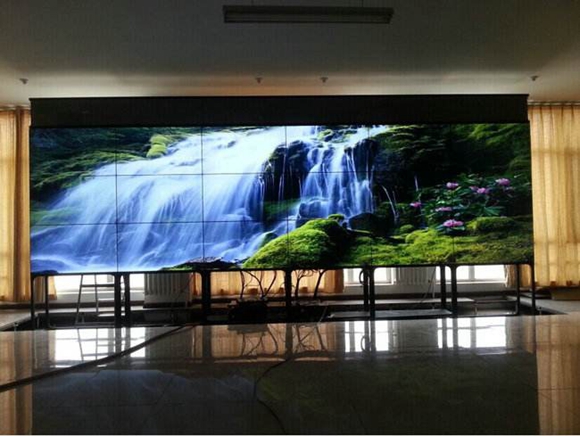
LED video walls are a type of flat-panel display composed of small LED module panels. They have advantages such as high brightness, low operating voltage, low power
consumption, large size capability, long lifespan, impact resistance, and stable performance. LCD video walls are made by splicing together LCD display units and
using splicing control software systems to achieve a large screen display effect. LED screens have larger pixel pitches, making them suitable for
outdoor use and for viewing from a distance, while LCD video walls are suitable for indoor use, for information dissemination, monitoring,
or command centers, where multiple signal sources can be displayed simultaneously.
Application of LED Video Wall
LED Video Wall are most commonly used in places such as TV broadcasting, shopping mall exterior walls, and airports where there is a large flow of people. As a background wall
for displaying digital information, LED Video Wall can present content more vividly and can also incorporate interactive features, allowing the screen to
either display static images that make viewers feel as if they are on-site, while also meeting the need for audiences to watch from a distance.
With their excellent functionality and reasonable price, LED Video Wall have gained wide popularity, conveniently, comprehensively,
and in real-time displaying video information from various systems. They are widely used across industries such as entertainment, security,
transportation, energy, and broadcasting, becoming a leading force in the large-screen display industry.
Advantages of LED Video Wall
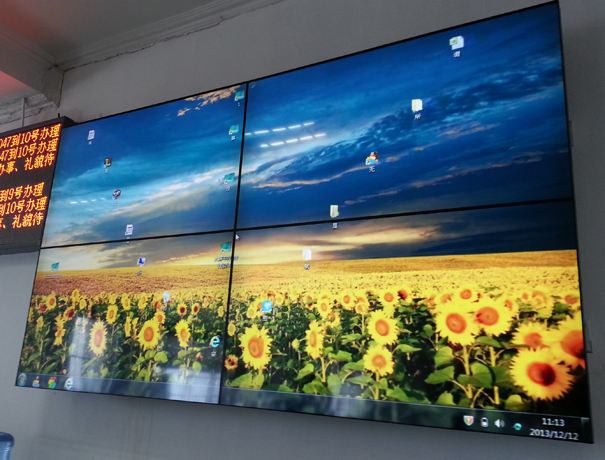
1. Improve visual defects: Seamless splicing effectively solves the problem of dividing lines on the screen. The gaps that often appear in ordinary splicing are usually unacceptable
to viewers, while seamless splicing achieves a completely seamless effect, bringing a very stunning visual experience.
2. Resolve the issue of color inconsistency: In seamless splicing technology, point-by-point brightness and chromaticity correction technologies are generally adopted, which ensures
the uniformity of brightness and chromaticity.
3. Long service life: The lifespan of LED displays is much longer than that of ordinary displays, and the maintenance costs are also lower in the later stages.
4. Broader perspective: Seamless splicing technology has greatly improved color contrast, and the images presented after seamless integration are better, with a wider visual range.
Key Points for Choosing LED Video Walls
1. Distance between points
The smaller the distance between points, the higher the pixels, and the higher the resolution, making the image clearer. Of course, the price is not cheap either.
2. Filling factor
When viewing an LED splicing screen up close, some granular texture may appear. This is due to a low fill factor. If you want a more perfect image quality, you need to choose an LED display with a high fill factor.
3. Color temperature adjustable
Different occasions require different color temperatures, so choosing an adjustable color temperature is the only way to achieve very satisfactory shooting results.
4. Size selection
When choosing the size of an LED Video Wall, it is best to choose a larger screen size, because the seams after splicing will be very small and the visual effect will be excellent.
5. Housing
Typically, displays with a metal housing should be chosen, as they have strong shielding performance and are not susceptible to any magnetic interference.
6. Setting Selection
The settings of the LED video wall should match the system of the control center. This facilitates rational layout, simplifies operation, and makes post-maintenance more convenient.


